
Windshield Protection
Windshield Pitting: What It Means for Your View
Windshield pitting can make low sun and headlights harder to see through. Learn what causes it, what not to try, and when to have the glass assessed.
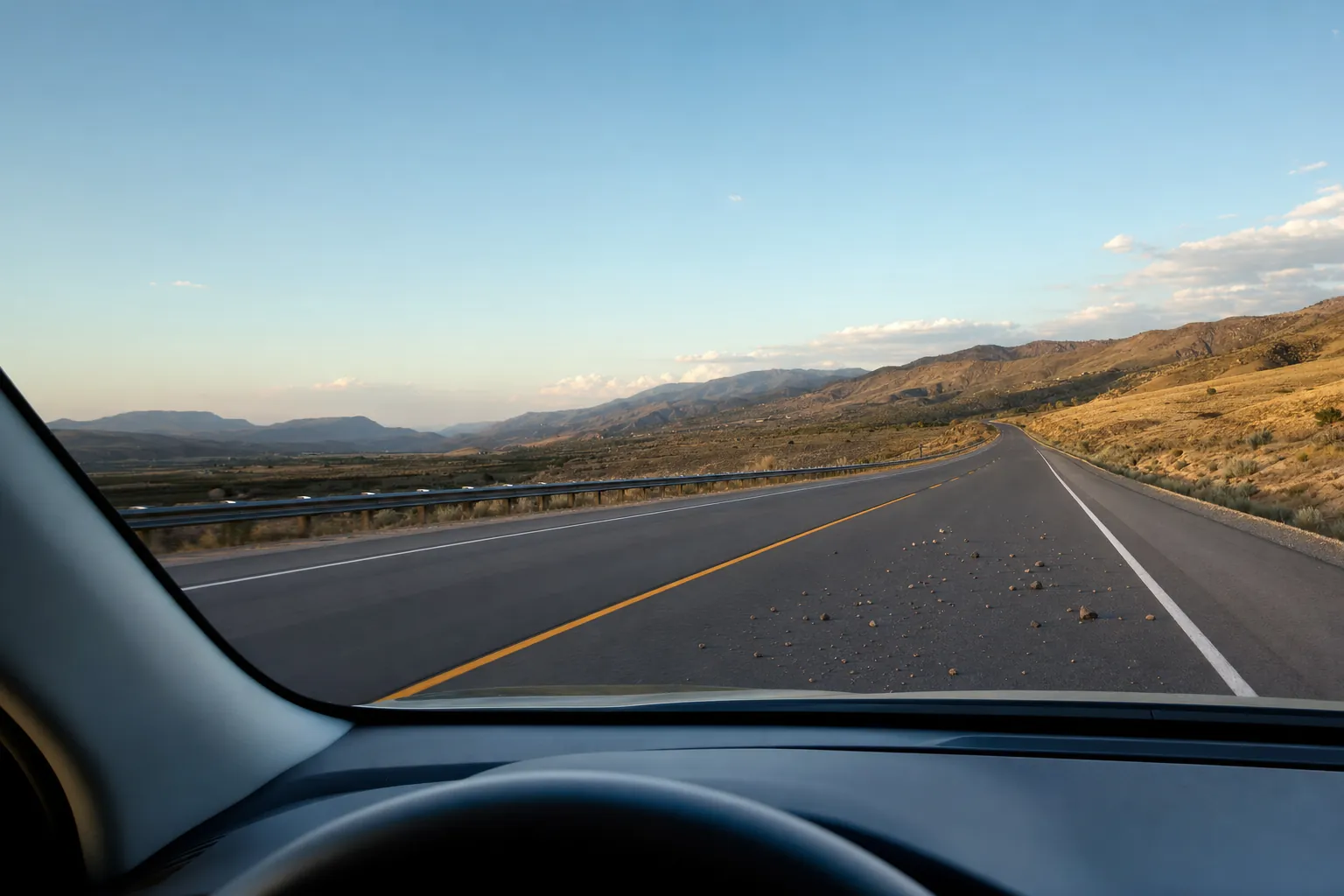
A windshield can look clean at noon and still become distracting when the sun sits low or headlights approach at night. If the glass seems hazy despite careful washing, the cause may be windshield pitting: a spread of tiny surface marks that accumulates gradually from ordinary road exposure.
Pitting is easy to confuse with hard-water spots, road film, a few stone chips, or fine wiper scratches. The distinction matters because each calls for a different next step. This guide explains what pitting looks like, why glare makes it suddenly noticeable, which shortcuts are worth avoiding, and when it is time to involve an auto-glass professional.
What windshield pitting is, and what it is not.
Windshield pitting is cumulative surface wear. Fine sand, dust, salt, and small road particles meet the outer glass at speed over thousands of miles. A single tiny strike may not be noticeable, but repeated contact can leave a field of shallow marks. Over time, those marks can scatter light instead of letting it pass cleanly through the windshield.
That is different from a chip, which is a localized impact point, and different again from a crack, which travels through the glass. It is also different from residue sitting on the surface. A thorough wash can remove grime, minerals, and some water spotting. It cannot restore a glass surface that has already been worn by repeated impacts. Glass.com’s explanation of windshield damage assessment is a useful reminder that damage type, location, and depth all matter before anyone recommends repair or replacement.
Wiper scratches can be part of the picture, especially when dry blades drag grit across glass, but they are not automatically pitting. Scratches tend to follow the wiper’s arc. Pitting is often more broadly distributed and becomes obvious when light comes through the glass at an angle. A professional can help separate these patterns before a driver spends money on the wrong remedy.
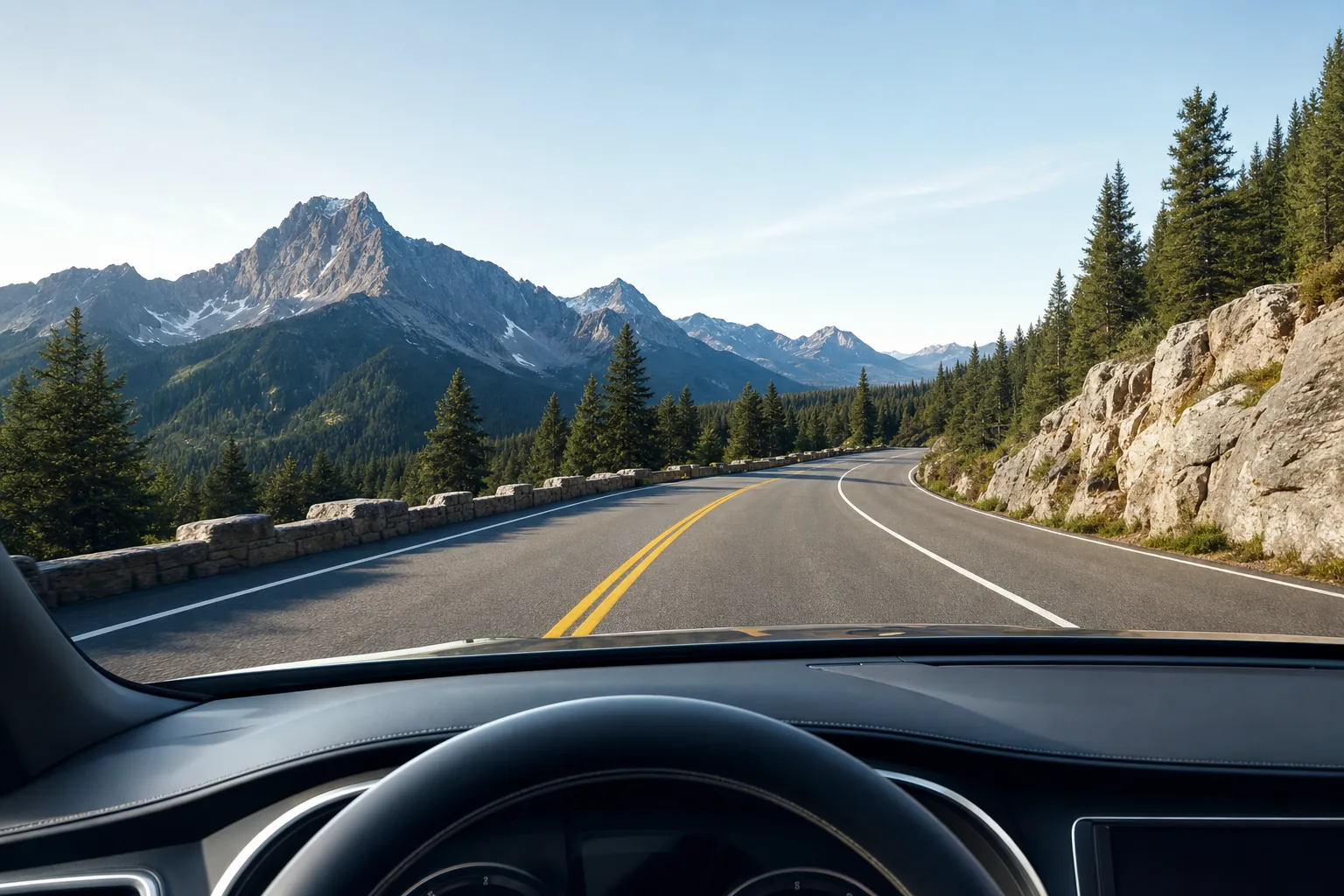
Why pitting is often most noticeable in low sun and at night.
Most drivers do not discover pitting while parked in a shaded driveway. It tends to show itself during the moments when good optical clarity matters most: sunrise, sunset, rain after dark, or a night drive with oncoming headlights. The light catches many tiny imperfections at once, creating sparkle, haze, or a washed-out view that may seem to appear overnight.
The change is usually not sudden. The awareness is. The windshield may have been slowly collecting wear for years, then a familiar commute into a low sun makes the effect impossible to ignore. Do not dismiss that experience simply because the glass looks better under different conditions. The practical question is whether the windshield remains comfortable and clear in the conditions where you regularly drive.
If glare is distracting, reduce risk in the moment. Clean the inside and outside of the glass with products appropriate for automotive glass, make sure wipers are in good condition, leave more following distance, and avoid treating a visibility concern as a cosmetic nuisance. If the problem persists after cleaning, schedule an inspection rather than trying increasingly aggressive abrasives.
How to tell pitting from surface contamination.
Start with a careful cleaning, because residue can imitate damage. Clean the windshield inside and out, rinse away loose grit before wiping, and use a clean microfiber towel. Do not reach for a scraper, harsh pad, or household abrasive just because spots remain. Those choices can create new marks and make a diagnosis harder.
Then inspect the glass in several conditions. Look at it in shade, in indirect daylight, and with low-angle light. Notice whether the marks wipe away, whether they follow a wiper path, and whether they are concentrated around a single impact. If a spot feels like one distinct defect, it may be a chip or scratch. If the view looks broadly grainy or hazy when light shines toward you, cumulative surface wear becomes more likely.
That observation is useful, but it is not a substitute for a glass assessment. Modern windshields are safety-related components and may include camera, sensor, heating, or display areas. The Safelite windshield damage guide describes why a technician considers location and the driver’s viewing area alongside the size and type of damage. The same principle applies here: the visible effect and vehicle details matter more than a one-size-fits-all rule.
Why quick polishing and filler claims deserve caution.
Searches for pitted glass often turn up polishing compounds, DIY kits, and claims that every mark can be buffed away. Be skeptical of a fast answer. Polishing works by removing material. On an optically critical, curved windshield, an aggressive or uneven process can create distortion that is more distracting than the original surface wear.
Resin repair is also not a universal answer. It can be appropriate for some contained chips, depending on the damage and its location, but widespread pitting is not one contained void. Treating hundreds of tiny marks like a single repair does not restore the glass to new optical condition. If someone promises that one product will erase every pit without tradeoffs, pause and get a second opinion.
A good conversation with an auto-glass professional is specific. Explain when you notice the glare, show any wiper patterns or isolated chips, and mention the vehicle’s driver-assistance features. Ask whether the glass can be safely evaluated as-is, whether there is an isolated repairable issue mixed in with the wear, and what replacement would involve if visibility has become the bigger concern.
A practical check before you book.
You do not need special tools to make an inspection appointment more productive. Choose a safe place and look through the clean windshield in the same conditions that bother you. If the problem appears at sunset, note whether the glare sits across the full driver’s view or stays in one area. If it happens at night, notice whether oncoming headlights bloom across the glass, whether the effect changes when the road is wet, and whether a fresh wiper pass makes it better or worse.
Next, check the wipers without turning the windshield into a test surface. Look for torn rubber, a bent frame, streaking, chatter, or a blade that has picked up grit. Wipers that are past their useful life can add fine arcs to the glass and make existing surface wear feel worse. Replacing a worn blade is basic maintenance, not a repair for pitting, but it removes one avoidable source of abrasion while you decide what the windshield needs.
Take a few clear photos only if they help show the condition, and do not rely on a phone photo to judge optical safety. The glass may look different through a camera than it does from the driver’s seat. The useful record is simple: when the visibility issue occurs, whether normal cleaning changes it, and whether there are any separate chips or cracks. That gives the professional useful context without pushing you toward a do-it-yourself diagnosis.
When to schedule an auto-glass assessment.
Arrange an assessment promptly if glare makes you squint, if oncoming lights spread across the driver’s view, or if the windshield is difficult to see through during low-sun commutes. It also makes sense to call when pitting appears alongside a chip, crack, deep scratch, damaged wipers, or a concern near a camera or sensor area. There is no need to diagnose the glass perfectly before booking. Clear notes about when and where you notice the problem are enough to start.
Be ready to share the year, make, and model, any windshield replacement history, and whether the vehicle has a heads-up display, rain sensor, or driver-assistance camera. Those details help the shop plan the right evaluation and explain the next step. If replacement is recommended, ask what the process means for your vehicle’s equipment and follow the shop’s guidance about safe driving and any required calibration.
For a single recent impact, use the site’s windshield crack assessment guide to understand why location and damage behavior matter alongside size. Pitting is a different pattern, but both situations call for clarity before a driver relies on a guess or a temporary workaround.
How to reduce future surface wear.
No routine eliminates road exposure, but practical habits can reduce avoidable surface stress. Keep distance behind gravel trucks and construction traffic when conditions allow. Slow down on loose-surface roads. Replace worn wiper blades before they chatter, split, or drag debris across the glass. Rinse away grit before wiping, and avoid running wipers over a dry, dusty windshield.
Those habits do not promise a spotless windshield forever. They are simply sensible ways to avoid adding unnecessary abrasion to a surface you rely on for every mile. The site’s guide to reducing windshield-chip risk adds practical driving and care considerations for drivers who regularly face debris-heavy routes.
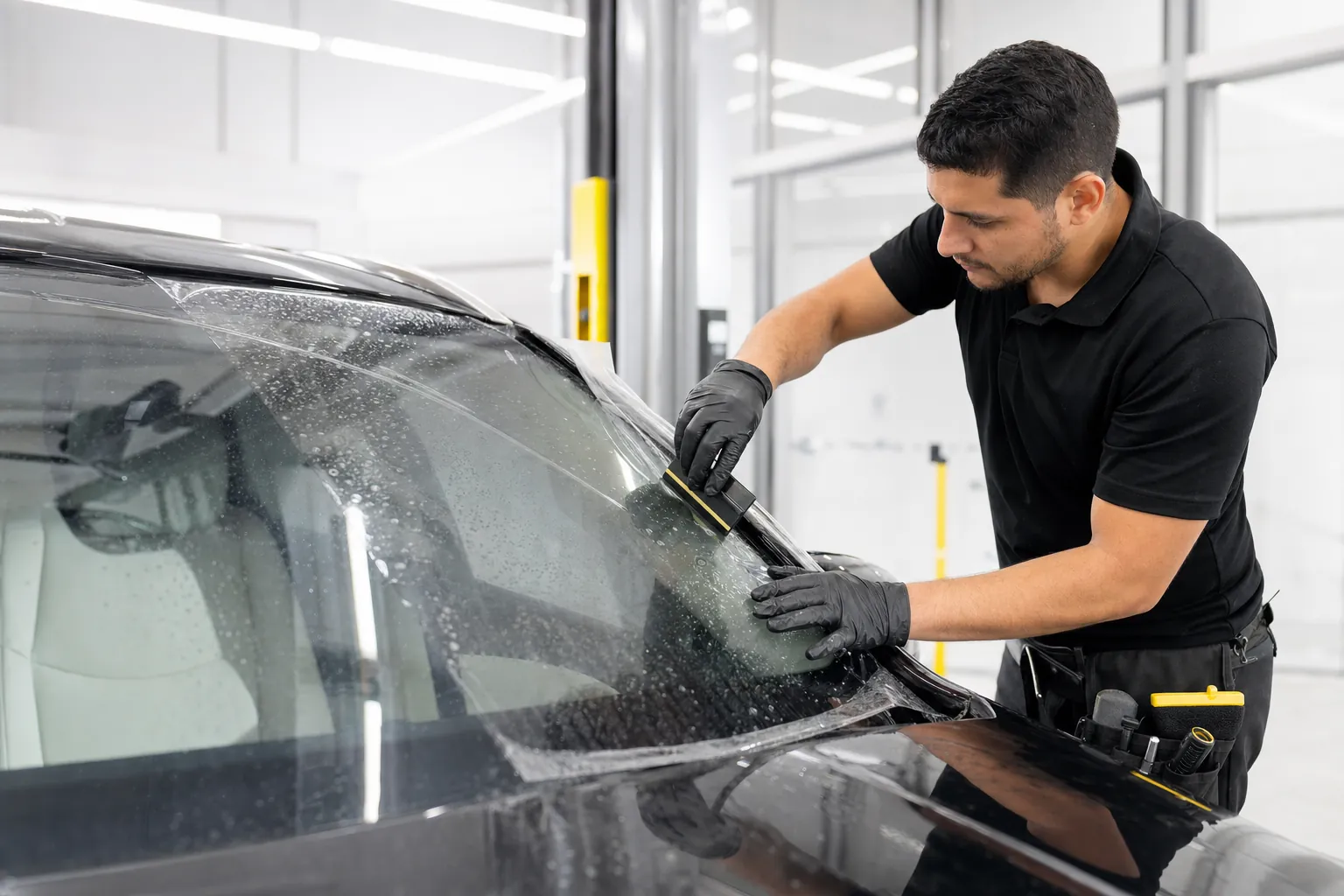
For a sound, compatible windshield, a windshield-specific protective film can be a future discussion. Its role is to add a replaceable exterior layer before new road exposure reaches the original glass. It does not restore pitted glass, repair a crack, or guarantee that no impact can create damage. The right time to explore it is after a qualified professional has confirmed the windshield condition, not as a way to cover up an existing visibility problem.
Keep the maintenance conversation honest.
Drivers are often offered a long list of treatments when a windshield starts looking tired. Some products can make cleaning easier or change how water behaves on a surface. Those benefits may be useful in the right setting, but they should not be presented as a cure for widespread wear already in the glass. A clear answer about what a product can and cannot do is more valuable than an impressive-sounding promise.
The same principle applies to protective film. The film is designed to be a sacrificial exterior layer for an appropriate application, not an excuse to ignore a poor view or an unresolved glass problem. When an installer begins with condition, clarity, and vehicle compatibility, the recommendation is more likely to fit the real job. That is the standard to look for whether the next step is basic care, glass service, or a prevention discussion after the windshield is confirmed sound.
Where Impact Defense fits after the glass is sound.
Impact Defense USA works with authorized installers to discuss windshield-specific film for compatible, sound glass. Drivers who spend regular time on highways, rural roads, construction routes, or other debris-prone conditions may want to ask whether a clear, replaceable protective layer fits their vehicle and driving pattern.
Start with the windshield that is on the vehicle today. If it needs repair or replacement, address that first. If an assessment confirms that the glass is sound, an authorized installer can explain film options, optical clarity, care, and realistic limits for the exact vehicle. The windshield protection film overview explains that conversation in more detail, and the authorized installer locator can help drivers find a local starting point.
Frequently asked questions
What is windshield pitting?
Windshield pitting is a spread of tiny surface marks caused by repeated contact with fine road grit, sand, and debris over time. It differs from one isolated chip because the wear is distributed across the glass rather than concentrated at one impact point.
Can a pitted windshield be repaired?
A qualified glass professional can assess the windshield, but widespread pitting is not the same as a single chip that can sometimes be repaired with resin. When pitting affects visibility, especially through glare, replacement may be the more appropriate conversation.
Can you polish windshield pitting out?
Polishing removes material from the glass, so it is not a casual do-it-yourself fix for a windshield. Ask a glass professional before attempting any abrasive or polishing process, particularly in the driver’s view.
Does windshield protection film fix pitting?
No. A protective film is not a repair for pitted, cracked, or otherwise compromised glass. It may be worth discussing only after a professional has confirmed that the windshield is sound and compatible.
Related posts

 When Is a Windshield Crack Too Big to Repair?Learn why crack size is only one part of a windshield repair decision, what else matters, and when to arrange a qualified assessment.