Windshield UV protection film
Windshield UV protection film.
Explore professionally installed exterior windshield protection for compatible glass, with film options designed to keep clarity at the center of a conversation about road exposure and solar energy.
Find an authorized installer →
More than sunlight
Your windshield meets the day before you do.
A front windshield faces a changing mix of sunlight, heat, weather, dust, road film and debris on every drive. The glass is also the viewing surface you depend on in traffic, low sun, rain and at night. That makes a windshield film decision different from a simple appearance upgrade.
Impact Defense is applied to the exterior of compatible glass. It is designed to add a sacrificial protective surface between the road and the original windshield while maintaining a clarity-first approach. Available series also offer distinct solar-energy and appearance considerations for the right application.
Keep the decision specific
UV protection should start with the exact glass and film.
There is no responsible one-setting answer for every windshield. The film option, the location of the glass, the vehicle, visibility needs and the rules where you drive all matter. That is why an installer should confirm the approved technical information for the precise product being considered instead of relying on a generic claim.
For many drivers, the better question is practical: how can a protective exterior layer fit the real use of this vehicle? A knowledgeable conversation can account for highway miles, daily parking, road conditions and the condition of the glass already on the vehicle.
Protection comes first
A clearer plan for ordinary road exposure.
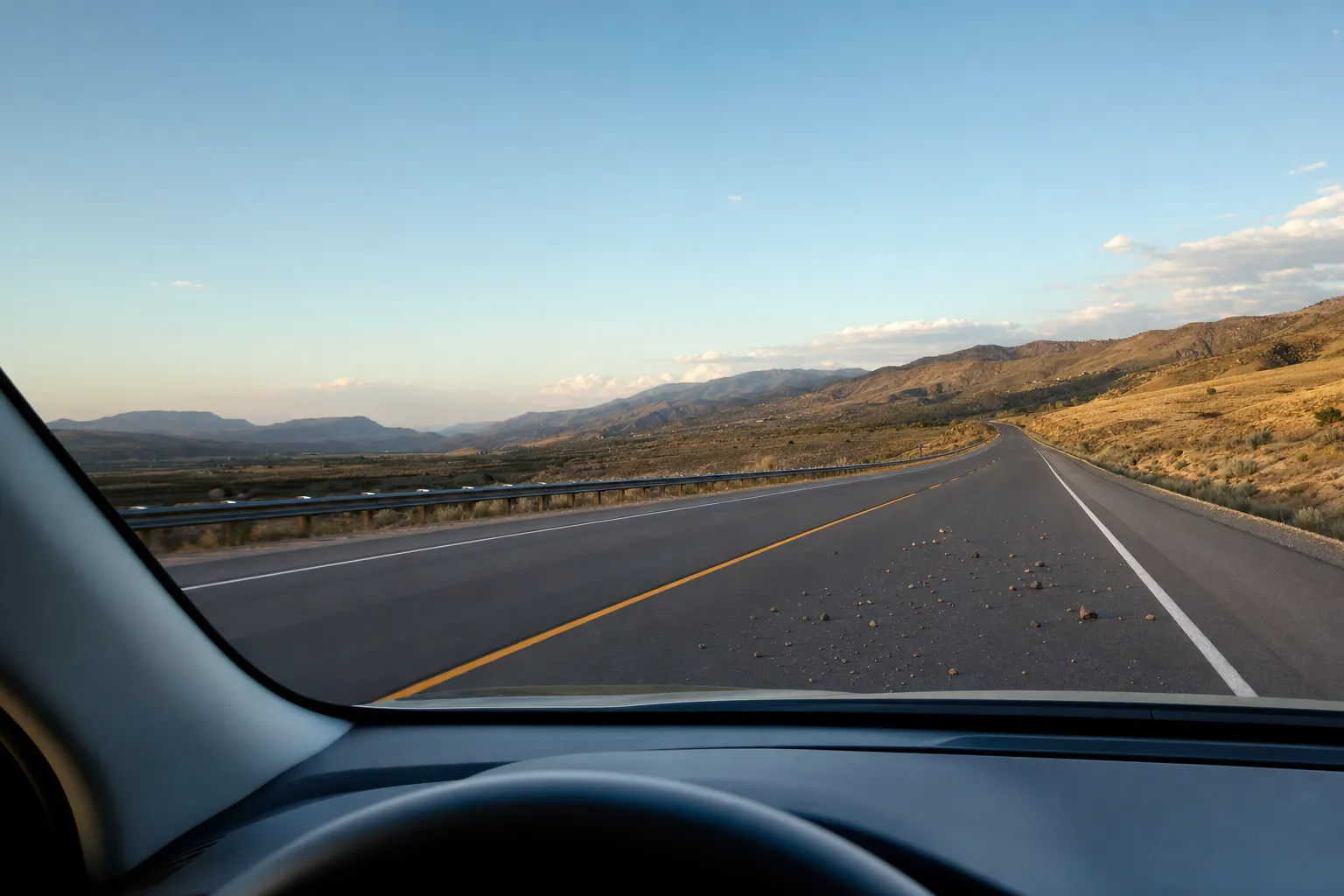
Fine grit, loose gravel, spray from the vehicle ahead and routine wiper contact can all affect an exposed windshield surface. Some damage is immediate. Other wear builds over time, then becomes more noticeable when glare, rain or night driving make the view more demanding.
A professionally installed exterior layer is designed to take the first contact from ordinary debris, weather and surface wear before the original glass does. It cannot prevent every impact, chip or crack. It gives drivers who value sound original glass a preventive option to discuss before exposure becomes the reason for a larger glass decision.
See how protection helps with road debris →Choose around the view
A windshield is not just another window.
Automotive glass has a job to do. It needs to remain clear through changing light, precipitation and the information competing for your attention on the road. Modern vehicles may also place cameras, sensors and other driver-assistance equipment around the windshield area.
That is why a professional assessment matters. The installer can look at the actual glass, identify existing chips, cracks or severe pitting that need attention first, and help determine whether an exterior film is appropriate. Protection film should never be used to conceal glass that needs repair or replacement.
Available options
Compare the role each Impact Defense series can play.
CLEAR Series is designed for optical clarity and everyday exterior protection. IR Series offers infrared-rejection performance designed to help reduce solar heat gain. Charcoal Series adds infrared-rejection performance, privacy and an enhanced appearance for appropriate applications.
The right choice depends on the intended glass location, vehicle configuration, product availability and applicable vehicle-glazing requirements. An installer can discuss which options are compatible with the job in front of them, rather than making a blanket recommendation from a screen.
Compare Impact Defense film options →Good preparation matters
The quality of the installation starts before the film is applied.
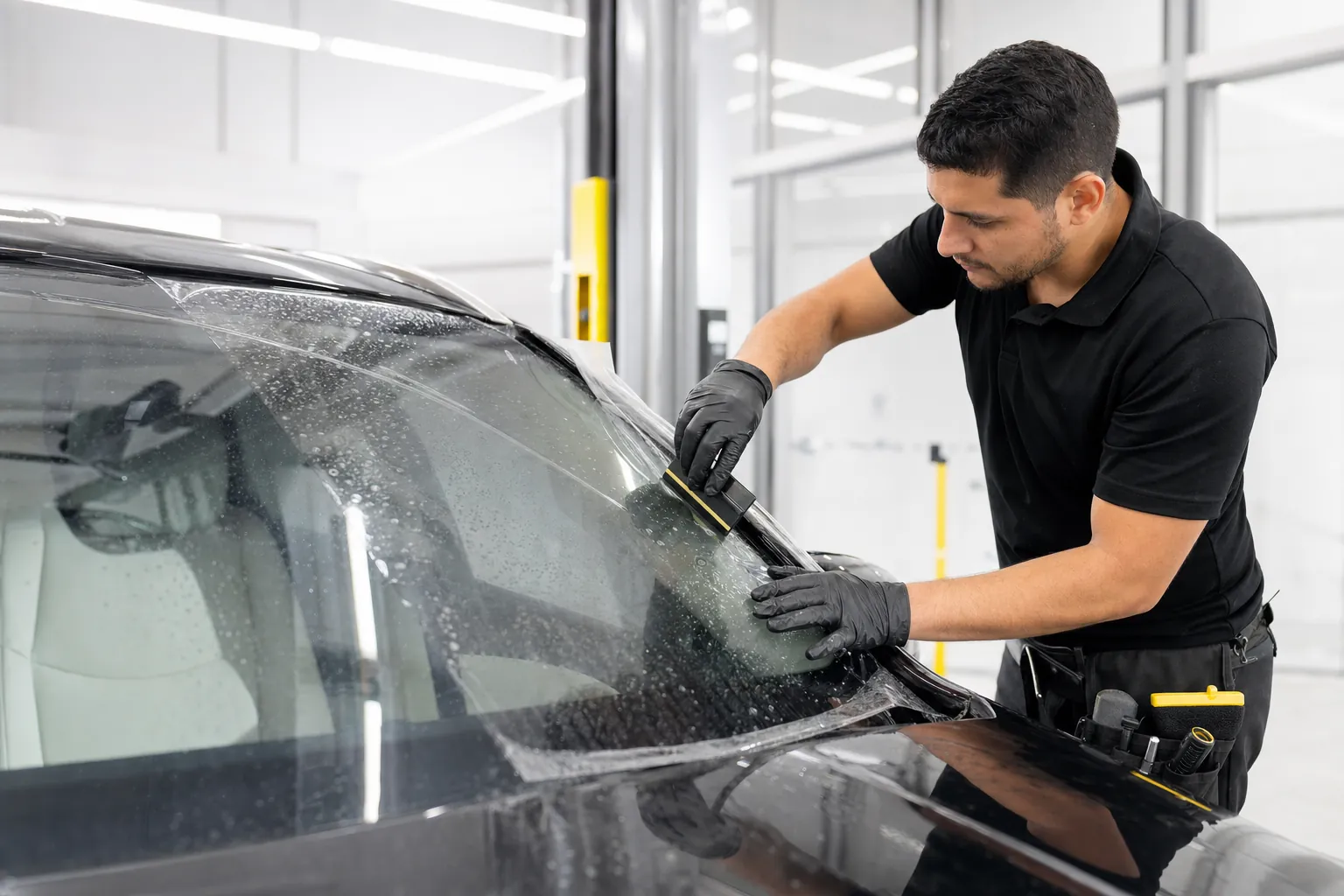
Sound, clean glass gives a professional installer the right starting point. Preparation should include a close look at the windshield condition and the surrounding area, along with a conversation about the vehicle and the outcome the driver is looking for. A good recommendation respects visibility, compatibility and the details that are unique to the glass.
That process is especially valuable when a driver is thinking about sunlight and exterior protection together. It keeps the conversation grounded in what the film is actually designed to do, what the relevant product documentation supports and what should be handled by a glass professional first.
What professional installation should include →Care for the surface
Keep a protective layer as clear as the glass beneath it.
Exterior film benefits from the same thoughtful care you would give any important vehicle surface. Use gentle, non-abrasive cleaning products with a soft cloth or wash mitt. When dust, dried road film or grit has collected, rinse before wiping so debris is not dragged across the surface.
Harsh scrapers, abrasive tools and improvised fixes can compromise a finish selected for optical clarity. If you notice deep damage, an edge lifting or a change in visibility, contact the installer for an inspection rather than trying to solve a windshield issue with a quick home repair.
When to consider protection
Think about the exposure your windshield sees most often.
A vehicle that spends time on interstates, behind commercial traffic, near active construction or on roads with loose material may face a different pattern of windshield wear than one used mostly for short neighborhood trips. Long commutes, frequent travel and outdoor parking can make the exterior glass feel like a more important part of everyday ownership.
Protection can also be worth discussing when you have purchased a vehicle you plan to keep, have recently replaced damaged glass and want to protect sound new glass, or simply want a more deliberate plan for a surface that is always in front of you. The goal is not to predict every road event. It is to decide whether a replaceable exterior layer fits the exposure and condition of your vehicle today.
Questions worth asking
Leave the installation conversation with a clear plan.
Ask the installer which Impact Defense series they would consider for the intended glass and why. Ask how the windshield condition, optical clarity, vehicle equipment and local requirements affect the recommendation. If heat-management or UV performance is part of the decision, ask for the approved technical information for the exact film variant, rather than treating all films as interchangeable.
You should also understand the preparation process, normal care, qualifying warranty coverage and who to contact if the protective layer is damaged or the view changes. Clear answers make the decision easier to live with. They also help separate a considered windshield-protection plan from a generic product purchase.
A vehicle-specific conversation
Get an answer built around the road you drive.
Drivers who spend long days in the sun, travel highways often, park outside or simply want to keep their original windshield in better condition all bring different priorities to the table. The right next step is not a generic promise. It is a conversation with an authorized installer who can see the glass and understand how the vehicle is used.
Share the year, make and model, the glass you want to protect and any concern you have about the current windshield. That gives the installer the information needed to discuss compatible options, care expectations and whether the application is a sensible fit.
Find an authorized installer near you →Windshield UV protection film questions
Can windshield protection film help with UV exposure?
Impact Defense offers film options with distinct solar-energy performance. The appropriate option, its availability and its performance depend on the exact film variant, vehicle, glass location and local vehicle-glazing requirements. An authorized installer can help confirm the right product information for your application.
Is UV-focused windshield film the same as window tint?
No. A windshield is a critical viewing surface, and windshield protection film is selected around compatible glass, optical clarity, professional installation and applicable requirements. It should not be treated as a generic tint decision.
Will windshield film stop every rock chip?
No. An exterior protective layer can help with ordinary road debris and surface wear, but it cannot make glass indestructible or prevent every chip, crack or damage event.
Can film be installed over damaged glass?
No. A chip, crack, severe pitting or any visibility concern should be assessed by a qualified glass professional first. Protection film is preventive, not a repair method.
How do I choose the right film option?
Start with the windshield condition, the vehicle, the glass location, the roads you drive and the outcome you care about. An authorized installer can then explain compatible CLEAR, IR or Charcoal Series options and the practical considerations for your vehicle.
Protect the view ahead